
The AI in military training market is $1.46B (2025) growing to $2.17B by 2030 at ~8% CAGR. Peer-reviewed research now validates ML-based predictive assessment, EEG neurophysiological monitoring, affective computing for stress/workload adaptation, and competency-based frameworks replacing hours-based training. Programs span DARPA ACE (sim-to-live RL transfer), Finnish Defence Forces AI scenario generation, USAF competency-based training, and multimodal learning analytics in maritime simulation. The field is converging on closed-loop adaptive training systems that fuse physiological sensing, performance prediction, and AI-generated scenarios.
Market Size 2025
Projected 2030
CAGR
DARPA ACE Test Flights
AI and machine learning are transitioning from experimental adjuncts to core infrastructure in military simulation training. The convergence of three capabilities defines the current inflection point: predictive analytics that forecast trainee performance before task completion, neurophysiological sensing that measures cognitive state in real time, and generative AI that creates dynamic adversaries and scenarios without manual scripting. The research base has matured significantly — peer-reviewed work now covers ML-based performance prediction from flight simulator data [1], EEG-derived cognitive workload metrics validated across simulation fidelities [2][3], affective computing frameworks linking emotional state to training outcomes [8], AI-generated adversary behavior in operational military systems [4], biofeedback-driven adaptive training in extended reality environments [5], competency-based assessment replacing hours-based training paradigms [6], and multimodal learning analytics fusing heterogeneous sensor streams for trainee evaluation [7]. This entry synthesizes these research threads into a coherent picture of where AI/ML in military training stands and where it is heading.
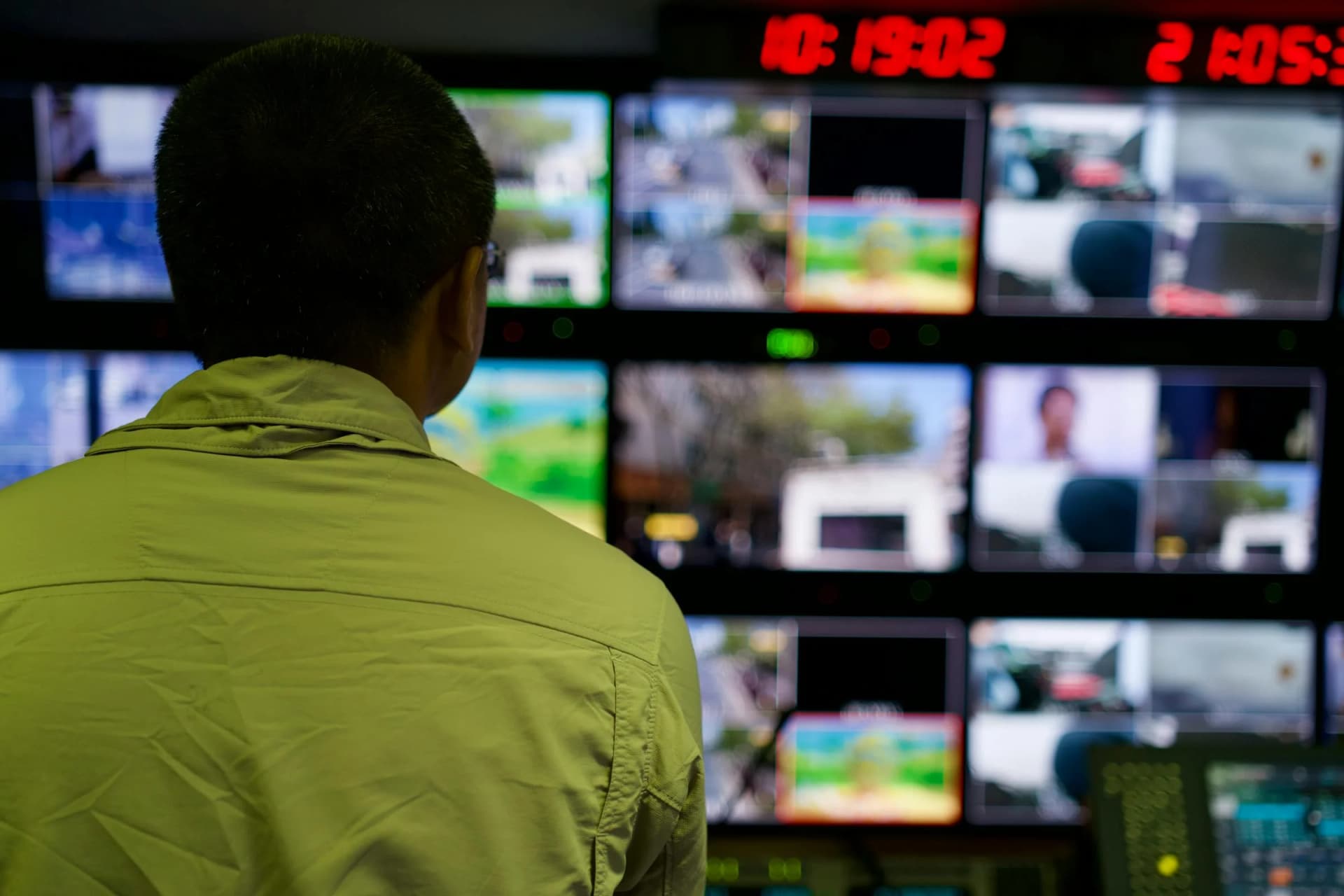
The adaptive training loop integrates ML prediction, physiological sensing, and AI scenario generation into a closed feedback system.
Machine learning algorithms can now predict student pilot performance from flight simulator data with operationally meaningful accuracy. Research published in the International Journal of Artificial Intelligence in Education (DOI: 10.1007/s40593-025-00464-y) demonstrates that visual attention features extracted from initial flight phases — specifically eye-tracking metrics during early maneuver segments — accurately predict whether a student will fail on simple flight tasks before the task is completed. The models use gaze fixation patterns, dwell times on instruments versus outside visual references, and scan path entropy as predictive features. Random forest and gradient-boosted classifiers achieved the strongest discrimination between pass and fail outcomes. The practical implication is significant: instructors could receive early-warning alerts during a training sortie, enabling real-time intervention rather than post-hoc debrief. This shifts the instructor's role from evaluator to adaptive coach. For simulation platform developers, it means the data pipeline — eye tracking, control inputs, state telemetry — must be captured, timestamped, and accessible to ML inference engines at low latency. CAE's Rise platform is architecturally positioned for this, but the ML models themselves remain research-grade; productionizing them requires validation across aircraft types, student populations, and training syllabi.
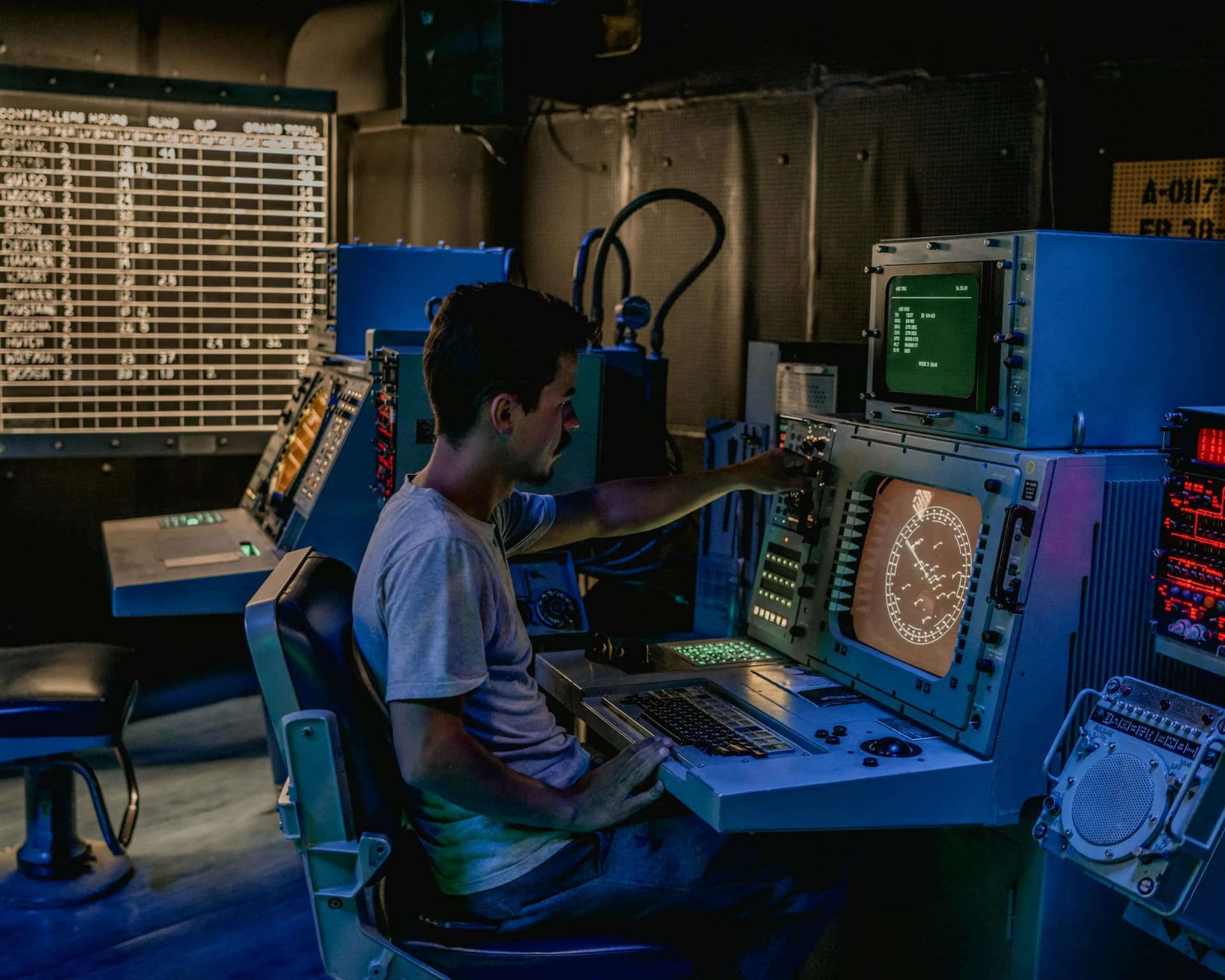
ML classifiers trained on early-phase visual attention features achieve operationally useful prediction accuracy for student pilot outcomes.
Two independent research streams have validated EEG-based cognitive state monitoring for simulation training. Van Weelden et al. (DOI: 10.1016/j.cogsys.2024.101282) established the EEG beta-ratio as a reliable neurometric for cognitive workload across different VR flight simulation fidelities. Their work compared low- and high-fidelity flight environments, finding that the beta-ratio (ratio of high-beta to low-beta power) tracked cognitive demand regardless of visual complexity — meaning the metric transfers across simulator types without recalibration. Separately, research on EEG microstate analysis (DOI: 10.1038/s41598-024-76046-0) demonstrated that transient, whole-brain electrical configurations can characterize pilot cognitive control states with temporal resolution on the order of milliseconds. Microstate topology shifts correlate with transitions between vigilance, active decision-making, and cognitive overload. Together, these findings establish that brain-computer interfaces are not speculative for training applications — they provide validated, real-time signals that can drive adaptive training logic. The engineering challenge is integration: current EEG systems require gel electrodes, controlled impedance, and artifact rejection for motion and EMG contamination. Dry-electrode systems suitable for helmet integration under operational conditions remain immature, but several defense programs (including DARPA N3) are funding miniaturized neural interfaces that could close this gap within 5-7 years.
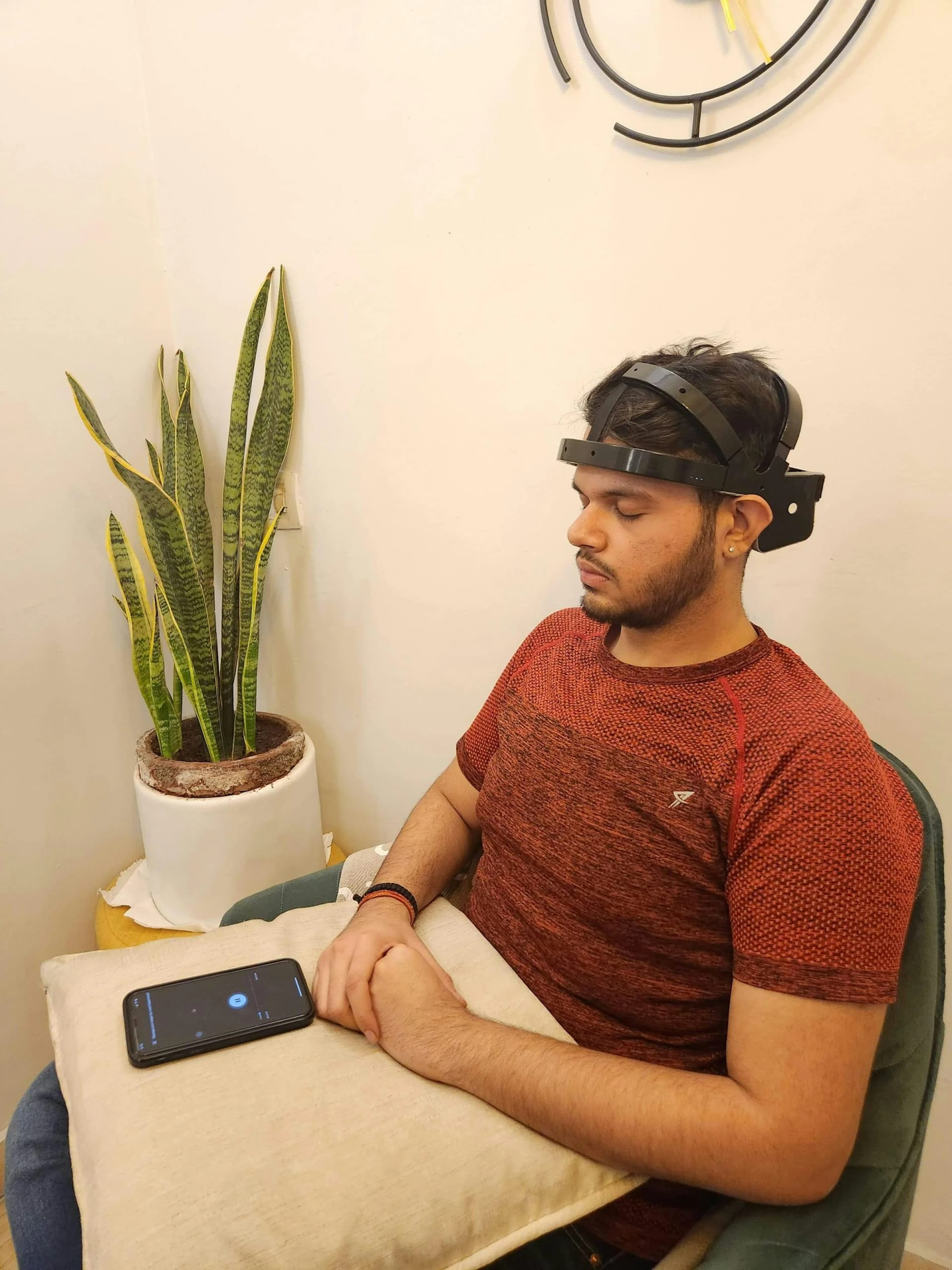
EEG-based cognitive workload monitoring provides millisecond-resolution insight into pilot mental state during simulated flight.
Ruiz-Segura and Lajoie's systematic review of 29 peer-reviewed articles on affect and performance in simulated flying tasks (2025) provides the most comprehensive synthesis to date of how emotional state mediates flight training outcomes. The central finding is consistent with the Yerkes-Dodson inverted-U model: moderate stress and arousal optimize performance, while both low arousal (boredom, complacency) and high negative-activating affect (acute anxiety, panic) degrade it. Critically, the review identifies that negative-activating emotions — stress, anxiety, frustration — are specifically detrimental to flight performance in ways that differ from general cognitive impairment. Anxious pilots exhibit narrowed attentional tunneling, delayed decision-making, and degraded instrument scan patterns. The review calls for real-time affective monitoring tools integrated into training systems, arguing that post-hoc self-report measures (the current standard) are inadequate for capturing the dynamic, moment-to-moment fluctuations in emotional state that drive performance variation. Research on biofeedback combined with AI in extended reality training environments (DOI: 10.1177/10468781241236688) demonstrates a practical implementation path: physiological signals — heart rate variability, galvanic skin response, respiration rate — are fused with AI classifiers to estimate affective state in real time and adjust training difficulty accordingly. When stress exceeds the optimal zone, the system reduces task complexity or introduces recovery periods; when engagement drops, it escalates challenge. This closed-loop affective adaptation represents a paradigm shift from fixed-syllabus training to individually tailored stress inoculation.
The convergence of predictive performance models, neurophysiological monitoring, and affective computing enables genuinely adaptive training systems — platforms that modify scenario difficulty, complexity, and pacing in real time based on individual trainee state. The biofeedback-AI integration work (DOI: 10.1177/10468781241236688) demonstrates that XR training environments can ingest multi-channel physiological data and use AI classifiers to drive scenario parameters within latencies acceptable for training purposes (sub-second classification, scenario adjustment within 2-3 seconds). The EEG microstate research (DOI: 10.1038/s41598-024-76046-0) adds the possibility of even finer-grained adaptation — detecting transitions between cognitive control states at millisecond resolution and adjusting task demands before the trainee is consciously aware of entering overload. The Finnish Defence Forces' operational AI integration (DOI: 10.1016/S1877050925031461) provides a military-institutional perspective: their simulation systems use AI not only for trainee adaptation but for scenario generation itself, creating tactically coherent adversary behaviors that respond to trainee decisions. The resulting training environment is neither scripted nor random — it is adversarially intelligent. The technical architecture for adaptive training requires three layers: a sensing layer (eye tracking, EEG, physiological sensors, control inputs), an inference layer (ML models for performance prediction, workload estimation, and affective classification), and an actuation layer (scenario engine APIs that accept real-time parameter modification). Most current platforms implement one or two layers; full three-layer integration remains a research frontier.
Research on AI-enabled competency frameworks (DOI: 10.1007/s10111-023-00737-3) challenges the foundational assumption of military and civil aviation training: that accumulated hours predict proficiency. The competency-based training and assessment (CBTA) paradigm replaces time-based progression with evidence-based demonstration of specific competencies — situational awareness, decision-making, crew resource management, manual aircraft control — measured through objective data rather than subjective instructor evaluation. AI enables this shift by providing continuous, multi-dimensional assessment that would be impossible for human evaluators to perform consistently. The research demonstrates that ML classifiers trained on simulator data can evaluate competency dimensions in parallel, detecting patterns that even experienced instructors miss — such as subtle degradation in scan patterns that precedes a decision error by several minutes. The implications for training economics are substantial: competency-based progression allows faster advancement for high-aptitude trainees and targeted remediation for those who struggle with specific skills, reducing total training hours while improving outcome consistency. ICAO has endorsed CBTA as the future of pilot training, and the USAF has begun exploring competency-based assessment for undergraduate pilot training. However, institutional inertia is significant — hours-based training is deeply embedded in regulatory frameworks, union agreements, and organizational culture. The transition will be gradual, but the direction is clear.
AI-generated adversary behavior and dynamic scenario creation represent the most operationally mature application of AI in military simulation. The Finnish Defence Forces' integration of AI into their simulation systems (DOI: 10.1016/S1877050925031461) provides a rare documented case of operational AI deployment in a NATO military. Their systems use AI for two distinct functions: adversary modeling (generating tactically coherent opponent behaviors that adapt to trainee decisions in real time) and scenario generation (creating training scenarios that satisfy specified learning objectives while maintaining tactical plausibility). This is not scripted branching logic — the AI generates novel behaviors within doctrinal constraints, producing training encounters that are unpredictable but tactically valid. DARPA's ACE program validated the extreme end of this capability: AI-controlled X-62A VISTA F-16 engaged manned F-16 in dogfight scenarios, with RL agents trained in simulation transferring to live platforms after 21 test flights with daily model retraining. The sim-to-live transition in under three years validates that RL agents trained in synthetic environments produce behaviors sufficiently complex and adaptive to challenge trained human operators. ST Engineering's MAK ONE platform and VR Forces engine represent the commercial implementation path — open architectures that allow RL-trained adversary agents to be layered onto existing simulation infrastructure. KAI's 35.5 billion won tactical AI program for the Republic of Korea Air Force marks the first allied RL combat AI program outside the United States.
| System | Developer | Capability | Significance |
|---|---|---|---|
| MAK ONE | ST Engineering | Open synthetic environment with RL integration | Modular AI layering on existing simulation |
| VR Forces | ST Engineering | Computer-generated forces engine | Analysis compressed from 9-12 weeks to <24 hours |
| MARS | Military.com reference | LLM-driven mission analytics | Commander-actionable insights from simulation data |
| NICO AI | USMC program | NLP-driven training interface | Lowers technical barrier for scenario modification |
| ACES | Google/NVIDIA/Epic/Blackshark.ai | Scalable AI/ML architecture | Hyperscaler compute for defense simulation |
| KAI Tactical AI | KAI (South Korea) | RL-based adversary AI for RoKAF | First allied RL combat AI outside US (35.5B won) |
| Finnish Defence AI | Finnish Defence Forces | AI adversary modeling and scenario generation | Operational NATO deployment of AI in simulation |
Multimodal learning analytics represents the data infrastructure layer that underpins all other AI/ML training capabilities. Research on multimodal learning analytics in maritime simulation (DOI: 10.1007/s11412-024-09435-2) demonstrates the fusion of heterogeneous sensor data — eye tracking, ship control inputs, communication logs, bridge resource management observations, and environmental state — into integrated trainee assessment dashboards. The maritime domain is instructive because it faces challenges analogous to aviation: complex multi-crew operations, extended mission durations, high-consequence decision-making under uncertainty, and regulatory training requirements that currently rely on subjective evaluator judgment. The research shows that multi-sensor data fusion produces assessment signals that neither individual sensor streams nor human observers can achieve alone. Specifically, correlating eye-tracking data with control inputs reveals whether a trainee saw a hazard and responded appropriately, failed to see it, or saw it but made an incorrect decision — distinctions that are invisible to traditional observation. For platform developers, the learning analytics requirement translates to a data architecture problem: all sensor streams must be time-synchronized, stored in a common format, and accessible to downstream analytics engines. The analytics layer must support both real-time inference (for adaptive training) and post-hoc analysis (for debrief and longitudinal progress tracking). CAE's Rise platform architecture supports this data pipeline, but the analytics models themselves — the algorithms that translate raw sensor data into actionable training insights — remain the competitive differentiator.
Several defense programs are moving AI/ML training capabilities from research to operational deployment. The USAF is the most advanced, with DARPA ACE demonstrating sim-to-live RL transfer and ongoing exploration of competency-based assessment for undergraduate pilot training to replace hours-based progression. The USMC's NICO AI program uses NLP-driven interfaces to lower the technical barrier for scenario modification, allowing instructors without programming expertise to create AI-enhanced training scenarios. Finland's Defence Forces represent the most documented European operational deployment, with AI integrated into simulation systems for adversary modeling and automated scenario generation — a significant milestone for NATO interoperability. South Korea's KAI tactical AI program (35.5 billion won) for the Republic of Korea Air Force marks the expansion of RL-based combat AI to allied nations. In the commercial sector, ST Engineering's MAK ONE provides the integration platform, while Google, NVIDIA, Epic, and Blackshark.ai collaborate on the ACES scalable AI/ML architecture that brings hyperscaler compute to defense simulation. CAE's Rise platform is positioned as the orchestration layer for these capabilities, but the competitive landscape is fragmenting: defense primes (Lockheed Martin, Boeing), technology companies (NVIDIA, Google), and startups are all pursuing AI-enabled training from different directions. The companies that control the software and data layers will define the next training cycle.
Despite significant progress, several critical gaps remain. First, cross-platform validation: most ML models for performance prediction and cognitive state classification have been validated on single simulator types with limited trainee populations. Whether models trained on one aircraft type or simulator fidelity transfer to others is largely untested. Second, long-term longitudinal data: current studies capture single sessions or short training blocks, but the relationship between AI-measured training metrics and long-term operational proficiency (months or years later) remains unestablished. Third, dry-electrode EEG and miniaturized physiological sensors suitable for integration into operational flight helmets are not yet reliable enough for deployment — current research relies on laboratory-grade equipment that is impractical in training environments. Fourth, regulatory acceptance: no civil aviation authority has accepted AI-derived competency assessment as equivalent to hours-based training for licensing purposes, and the validation pathway for doing so is undefined. Fifth, adversarial robustness: AI adversary models can exhibit unrealistic behaviors at the boundaries of their training distributions, and the testing methodology for ensuring tactically valid behavior across the full operational envelope is immature. Sixth, affective computing calibration: individual differences in physiological baselines mean that stress classifiers require per-trainee calibration, creating a cold-start problem for new trainees. The research frontier is converging on fully integrated adaptive training systems that close the loop between sensing, inference, and scenario actuation — but the engineering challenges of real-time multi-sensor fusion, low-latency ML inference, and robust scenario APIs at production scale are substantial. The next 3-5 years will determine whether these capabilities mature into fielded systems or remain perpetual research demonstrations.