
The global maritime simulation market is projected to reach USD 7.0 billion by 2033 (CAGR 6.8%). Dominated by Kongsberg Maritime, Wärtsilä Voyage, VSTEP, and Thales Naval. Asia Pacific leads ship bridge simulator segment. VR adoption research (TAM study, N=84) identifies perceived usefulness as the primary driver of simulator adoption, with the VR market projected from $18B (2024) to $60B (2029). STCW Manila Amendments mandate simulation for emergency preparedness, yet experienced seafarers overestimate their emergency competencies (91.2% self-confidence vs 54.6% correct answers). CAE has near-zero presence — this is the most important whitespace area in the competitive landscape.
Market Size by 2033
CAGR 2024-2033
VR Market Projected 2029
Officers Trained Annually (Wärtsilä CSMART)
Maritime simulation is transitioning from a compliance-driven commodity to a technology-differentiated competitive domain. Three forces are converging to reshape the market. First, VR and immersive technologies are enabling fidelity levels previously achievable only in full-mission bridge simulators — at dramatically lower cost and with greater deployment flexibility. Second, regulatory pressure from the STCW Manila Amendments (2012) is expanding mandatory simulation hours, particularly for emergency preparedness and crisis management training. Third, the green-shipping transition (LNG, methanol, ammonia, dual-fuel propulsion) is creating entirely new training requirements that no incumbent has fully addressed. Academic research on maritime education futures identifies technology-enhanced learning, simulation-based assessment, and data-driven competence management as the three pillars of next-generation maritime training. The market remains dominated by Kongsberg Maritime (50+ years), Wärtsilä Voyage (cloud/AI platform, CSMART training 7,000+ officers annually), VSTEP (offshore wind specialization), and Thales Naval (submarine/sonar). CAE has near-zero presence in a $7.0B market growing at 6.8% CAGR.
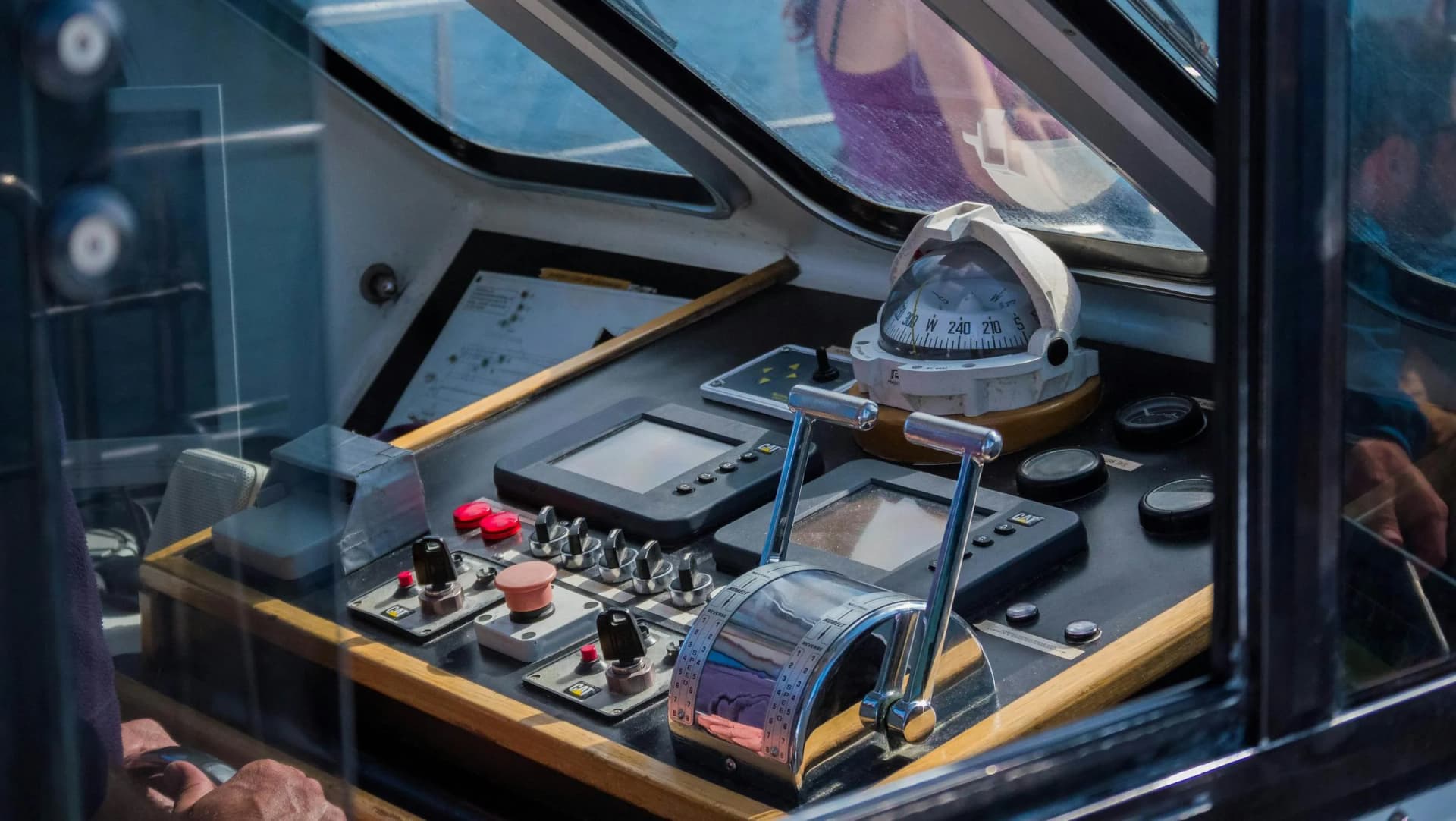
Full-mission bridge simulators remain the gold standard for STCW-compliant navigation training, but VR alternatives are rapidly approaching equivalent fidelity for specific training objectives.
A Technology Acceptance Model (TAM) study by Bacnar et al. (Applied System Innovation, 2025; DOI: 10.3390/asi8030084) provides the first empirical evidence of VR adoption drivers in maritime engine room simulation (N=84 maritime professionals). The primary finding: perceived usefulness — not perceived ease of use — is the dominant predictor of VR simulator adoption intention. This has direct commercial implications: vendors must demonstrate training outcome improvements, not merely technological novelty. The study contextualizes the maritime VR opportunity within the broader VR market trajectory: $18B in 2024, projected to reach $60B by 2029. For maritime simulation specifically, VR addresses the critical scalability constraint — full-mission engine room simulators require large physical installations, while VR engine room trainers can be deployed to any facility with sufficient floor space for room-scale tracking. The cost differential is an order of magnitude. However, the TAM findings also caution that adoption depends on instructor confidence and institutional readiness, not just hardware availability.
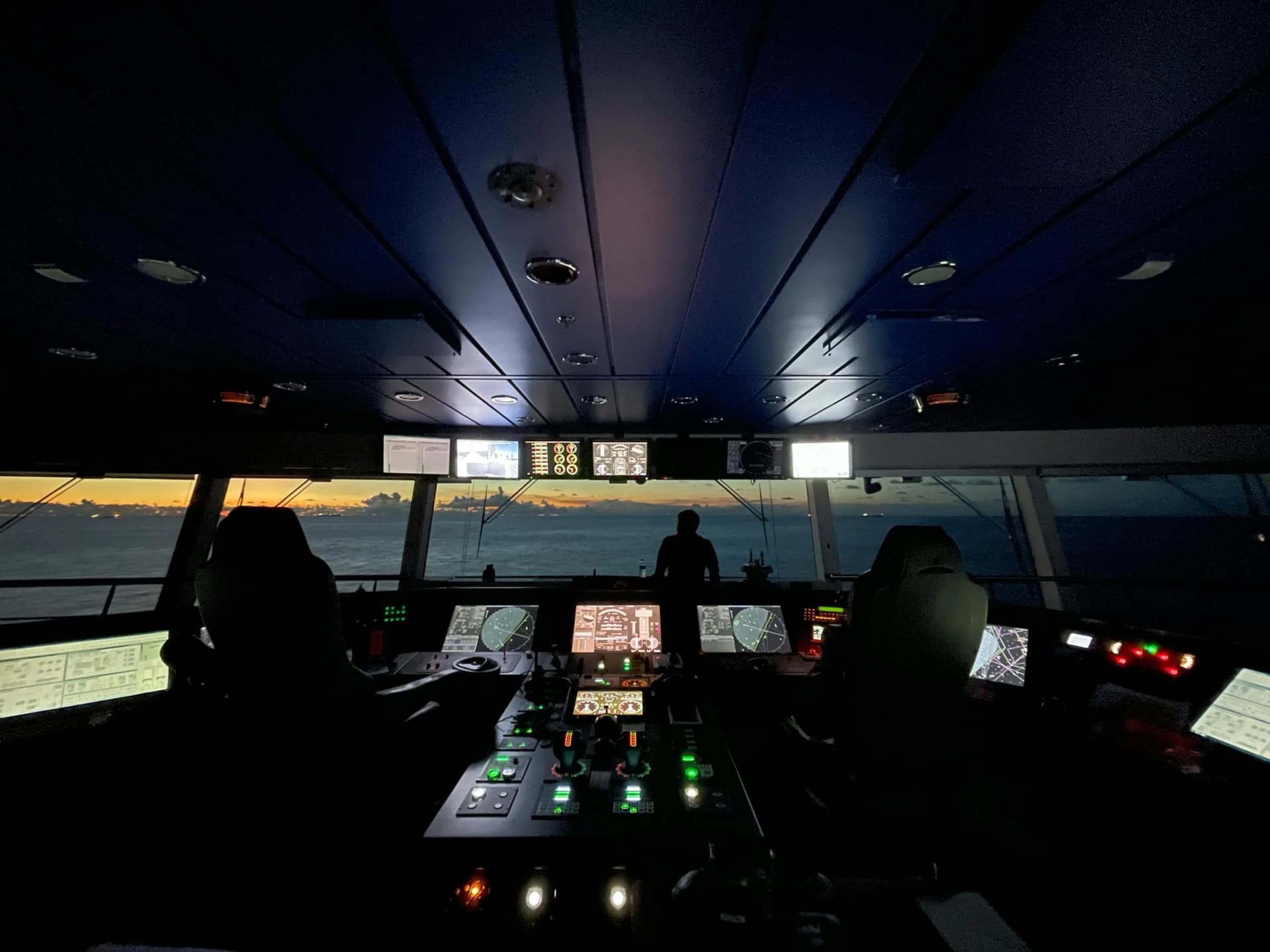
VR engine room simulators enable hands-on training with novel propulsion systems (LNG, dual-fuel, ammonia) without requiring physical mockups of engines that may not yet be in widespread service.
Engine room simulation represents 15% of the maritime simulation market but is the segment most disrupted by VR and green-shipping requirements. Traditional engine room simulators model diesel and steam propulsion — mature technologies with well-understood failure modes. The transition to LNG, methanol, ammonia, and dual-fuel propulsion systems introduces new training challenges: novel fuel handling procedures, cryogenic safety protocols, fuel-switching manoeuvres, and emergency responses to fuel-specific hazards (ammonia toxicity, LNG vapor dispersion). No incumbent vendor offers a complete green-fuel engine room training suite. VR is particularly suited to engine room training because the physical environment is inherently three-dimensional — trainees must navigate complex piping systems, locate valves, and perform procedures that require spatial awareness. The TAM study confirms that maritime professionals recognize this utility: perceived usefulness scores for VR engine room trainers were highest among participants with green-fuel exposure, suggesting that the training gap is already felt by practitioners.
Estimated segment distribution based on product portfolio analysis of major vendors. Submarine training has outsized strategic value relative to market share.
| Company | Specialty | Key Products | Threat to CAE |
|---|---|---|---|
| Kongsberg Maritime | Full-spectrum maritime (50+ years) | K-Sim Navigation/Engine/Fast Craft/Safety/DP/Cargo, SCTT submarine trainer | Critical — integrated stack |
| Wärtsilä Voyage | Cloud/AI maritime simulation | Transas-based platform, CSMART (7,000+ officers/year) | High — pursuing same data-connected-training thesis |
| VSTEP | Offshore wind specialization | NAUTIS platform, port/harbor/offshore | Moderate — niche but growing |
| Thales Naval | Submarine/sonar/ASW training | Sonar 2076 (Faslane), submarine control/machinery/combat sims | Critical — locked into allied navies |
Bridge simulation is the largest market segment (35%) and the most regulated, driven by STCW requirements for navigation competency certification. However, research by Baldauf et al. (Journal of Transportation Safety & Security, 2015; DOI: 10.1080/19439962.2014.996932) reveals a critical gap between bridge navigation training and emergency preparedness. Their study at the World Maritime University combined a Ship Handling Simulator with a Safety & Security Trainer to create multidimensional team training scenarios. The most striking finding: experienced seafarers dramatically overestimate their emergency competencies — 91.2% self-reported confidence compared to 54.6% correct answers on emergency procedure assessments. This 36.6 percentage-point gap between perceived and actual competence represents a systemic safety risk that conventional simulator training does not address. The Costa Concordia disaster (2012) is cited as evidence that maritime emergency response failures persist despite existing training regimes. The implication for simulation providers is clear: bridge simulators must integrate emergency and crisis management scenarios, not treat navigation and safety as separate training domains. Multidimensional simulation — combining ship handling with safety, security, and environmental response — is the direction regulators are moving.
The International Convention on Standards of Training, Certification and Watchkeeping (STCW), as amended by the 2010 Manila Amendments (effective 2012), is the primary demand driver for maritime simulation. The Manila Amendments mandate simulation-based training for emergency preparedness, security awareness, and safety familiarization — expanding the simulator training requirement beyond navigation competency to crisis management and team coordination. STCW regulation I/12 specifically addresses the use of simulators, requiring that training institutions demonstrate simulator fidelity, instructor qualifications, and assessment validity. The regulatory trajectory is toward expanded simulation credit: as VR fidelity improves and empirical evidence accumulates (the Baldauf and Bacnar studies both support simulator efficacy), IMO working groups are evaluating whether VR-based training devices can satisfy STCW requirements currently met only by full-mission simulators. For simulation providers, STCW compliance is not optional — it is the market access gate. Providers who can demonstrate STCW-qualified VR alternatives to full-mission simulators will unlock a deployment model that scales beyond the capacity constraints of traditional maritime training centres.
Multimodal learning analytics represent the next frontier in maritime simulation, moving beyond binary pass/fail competency assessment to continuous performance monitoring. Research on multimodal learning analytics in maritime training contexts (DOI: 10.1007/s11412-024-09435-2) examines how physiological sensors (eye tracking, galvanic skin response), behavioural telemetry (control inputs, communication patterns), and environmental data (scenario complexity, time pressure) can be fused to produce granular trainee performance profiles. Combined with research on maritime simulator curricula design (DOI: 10.1007/s13437-024-00351-8), the evidence base supports a shift from hours-based training compliance to competency-based progression — trainees advance when data demonstrates mastery, not when a fixed syllabus duration expires. For CAE, this aligns directly with the Rise platform's data-driven training thesis. The company's existing expertise in aviation performance analytics (predictive assessment, adaptive difficulty) is directly transferable to maritime. Learning analytics also create a recurring revenue opportunity: analytics platforms generate value across the entire training lifecycle, not just during initial simulator procurement.
K-Sim product family spans six categories, allowing Kongsberg to offer integrated training covering the full operational scope of a vessel.
Maritime is the most important whitespace in CAE's competitive landscape. With near-zero presence in a $7.0B market growing at 6.8% CAGR, the question is not whether to enter but how. The empirical evidence base now provides a clear entry thesis: VR-based training devices (TAM-validated adoption drivers), data-driven competency assessment (multimodal learning analytics), and integrated safety/navigation simulation (addressing the 36.6-point competence gap) collectively define a next-generation maritime training platform that no incumbent fully offers. Entry pathways include acquisition of a niche player (VSTEP, offshore wind specialists), OEM teaming for submarine programs (AUKUS, Canadian Surface Combatant adjacency), and organic development of green-shipping training modules. The green-fuel category is the lowest-barrier opportunity: new technology without dominant incumbents, growing regulatory pressure, and direct analogues to CAE's engine and systems simulation expertise. The learning analytics opportunity is particularly compelling — CAE's Rise platform already implements the data-connected training model that Wärtsilä Voyage is pursuing, suggesting that CAE could leapfrog into maritime with a software-first strategy rather than competing on hardware-intensive full-mission bridge simulators.